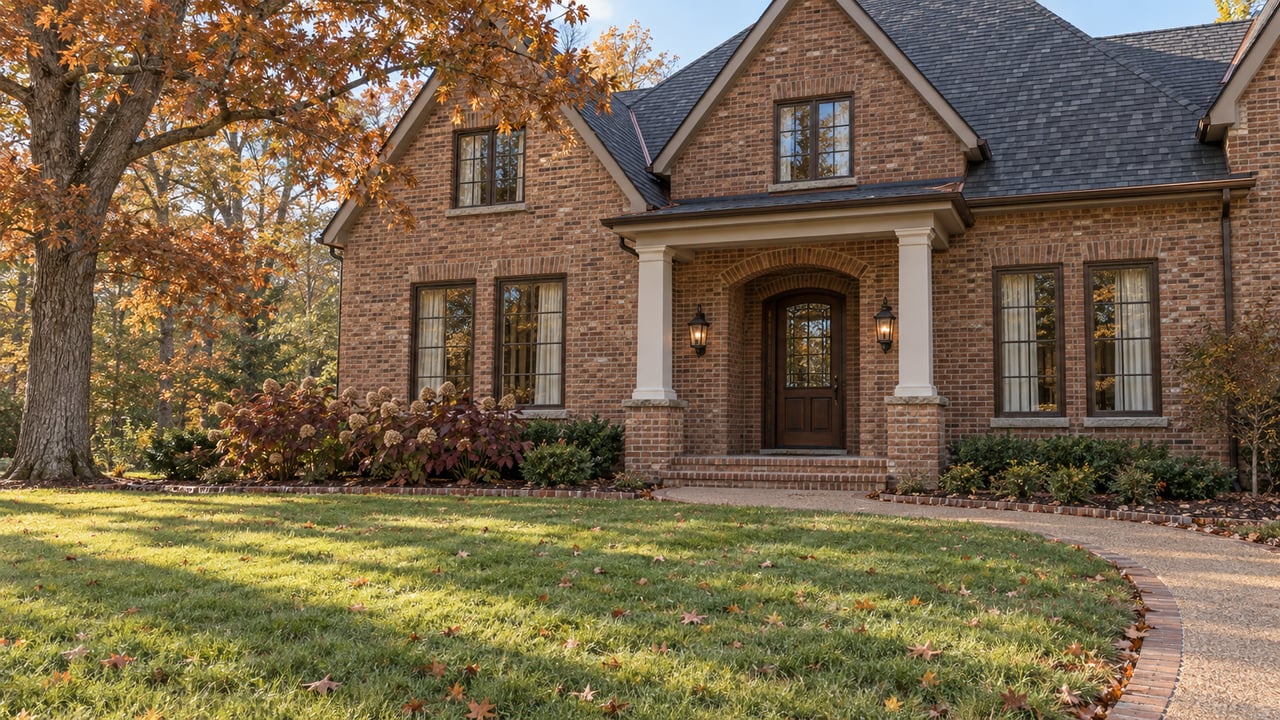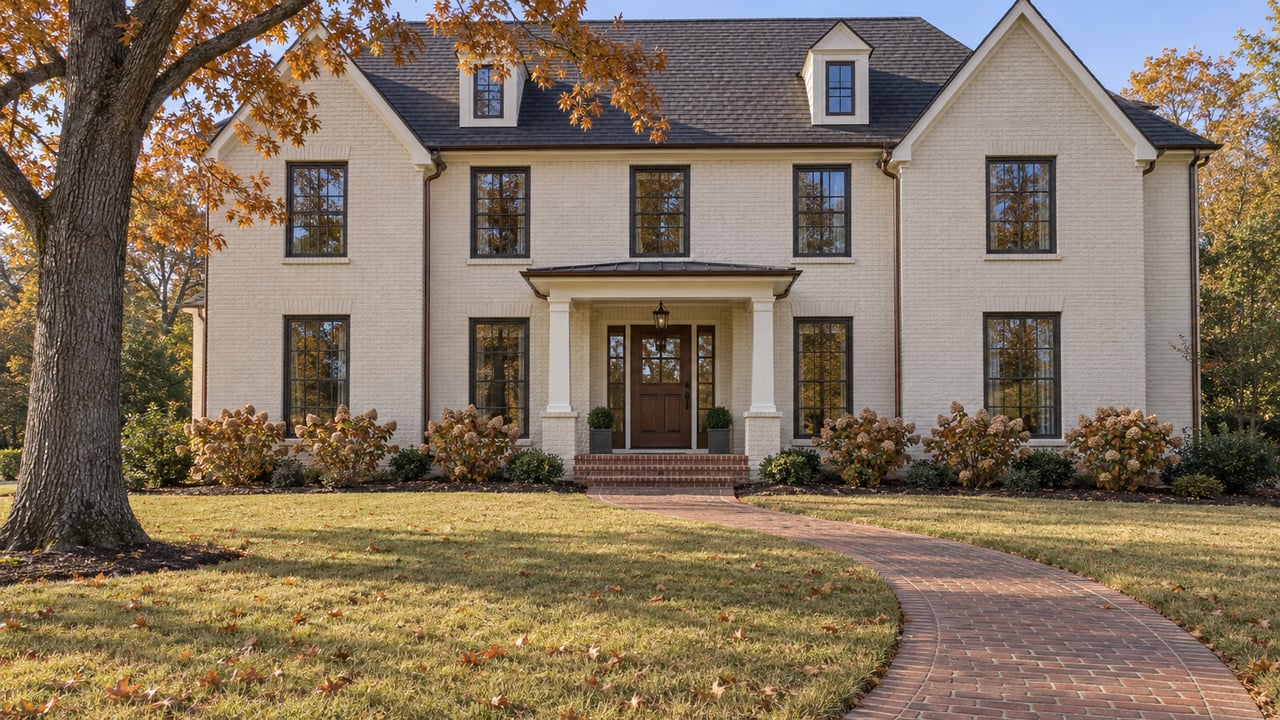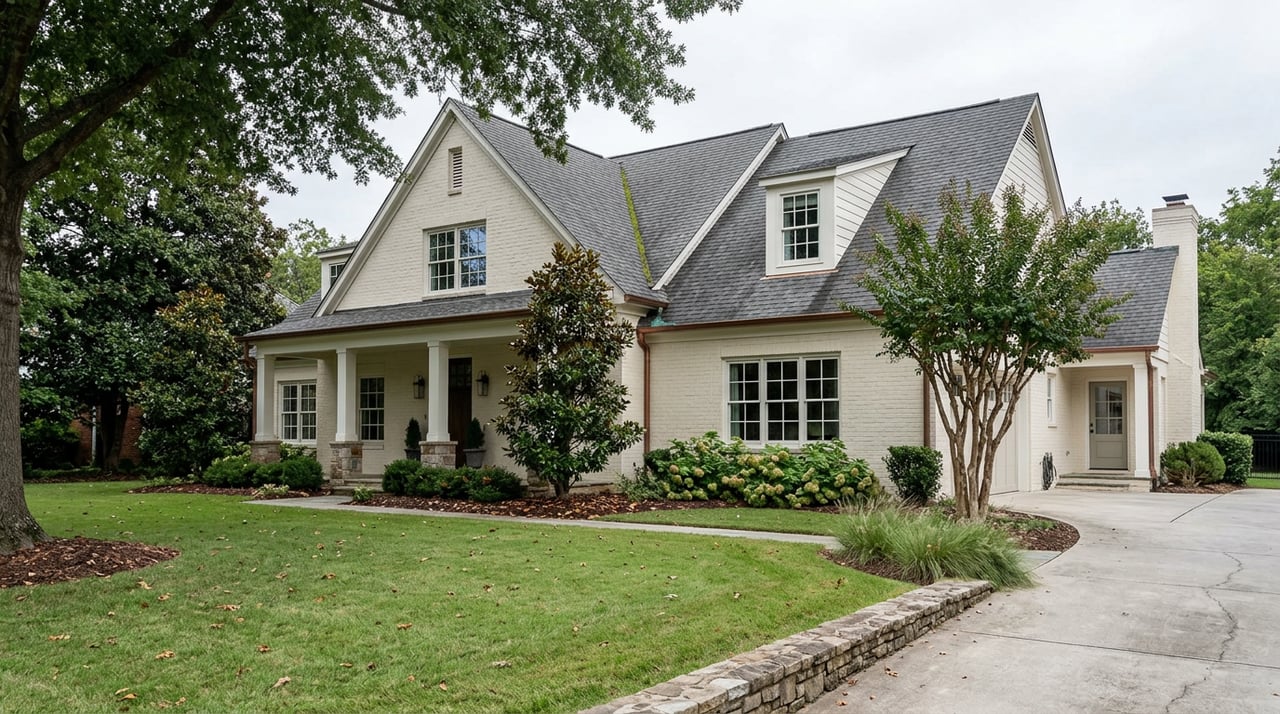
Two homes sit half a mile apart off the same stretch of road west of GA-400, both built in the last ten years, both around 3,200 square feet, both priced within $15,000 of each other on paper. One has a $65 monthly utility bill. The other has a tank buried in the backyard that will need pumping every three to five years and, eventually, a replacement drain field that could run anywhere from $10,000 to $25,000 depending on how the soil behaves.
Nothing on the listing sheet tells you which house is which. You find out when you ask about the water bill, or when an inspector points at a green rectangle of grass that looks a little too uniform.
The Line That Doesn't Show Up on a Home Tour
Cumming's mailing address covers most of Forsyth County, one of the fastest-growing counties in the country, and that growth has not moved evenly. The subdivisions packed along the GA-400 corridor and around The Collection at Forsyth went in fast and mostly on public sewer. Step off those main roads toward Lake Lanier, up around Sawnee Mountain, or out to the older, larger-lot properties near Coal Mountain, and you are very likely looking at a private septic system instead.
That split runs through the county at a level most buyers never think to check. A simple signal helps: if you see a monthly sewer charge on the water bill, you are almost certainly on public sewer. If the house has a well instead of a county water meter, you are on septic, full stop. Two houses on the same road can be set up completely differently, and the difference is not a matter of preference. It shapes what the house will cost you to maintain, what you can build on the lot later, and in some cases, what the house is even allowed to become.
Why Septic Isn't Always the Cheap Seat
The easy assumption is that septic means older, more rural, and therefore less expensive, while sewer means newer construction and a higher price tag. That holds for a lot of the county. It breaks down completely once you get to the water.
Lakefront and near-shoreline homes on Lanier are some of the most common septic properties in Forsyth County, and they are also some of the most expensive.Buyers pay a premium for the shoreline lot anyway, because there is only so much buildable land against the lake and public sewer will likely never reach it. Septic there is not a discount. It is the price of admission to something Cumming Utilities is not going to extend service to.
Meanwhile, the newer subdivisions with public sewer along the 400 corridor are frequently the more accessible end of the market. Early 2026 figures on the broader Cumming market put entry-level townhomes in the high $300,000s to low $400,000s, while true lakefront or luxury septic estates were pushing past $800,000 to $1 million. Sewer access, in other words, does not track neatly with price. It tracks with where the infrastructure happened to reach first, and the lake was never on that list.
The Foundry Project Shows Where the Line Moves Next
The septic and sewer boundary in Forsyth County is not fixed. It has moved before, and the long-range sewer plan describes areas projected for future conversion.
Cumming Utilities' Foundry Sanitary Sewer Improvements project had proposals due September 17, 2026 and a mandatory pre-bid conference held in late August. The project is part of the much larger Cumming Sewer Master Plan, which lays out projected sewer demand and the specific service areas still requiring septic tank conversion through 2050. The plan names actual infrastructure: pump stations like Baldridge Creek, Settingdown Creek, Sawnee Creek, and Samples Road, along with the Bethelview Road Advanced Water Reclamation Facility and a proposed Eastside facility that would eventually discharge near Lake Lanier.
This has happened before in a way that is easy to verify. In 2020, homes in a neighborhood off Samples Road were approved to move from private septic tanks onto the City of Cumming's sewer system, a conversion covering roughly five dozen homes, according to reporting from Forsyth County News. That kind of shift changes more than a monthly bill. It can change what a lot is allowed to support if it is ever redeveloped, since Forsyth County's zoning code treats septic-served districts and sewer-served districts differently. Res2 and Res1 districts are generally built around individual septic systems, with lot size partly determined by the room needed for a drain field and its required replacement area. Higher-density districts like CR2 and Res3 require public sewer or an equivalent private treatment plant with adequate capacity. A lot that gets added to a sewer service area does not just get cheaper utility bills. It can unlock development potential the septic version of that same parcel never had.
What a Perc Test Actually Protects You From
If you are looking at raw land or an older home on a large lot anywhere outside the immediate GA-400 corridor, the soil itself becomes part of the transaction. Before a septic permit gets issued, Forsyth County Environmental Health requires a soil evaluation, commonly called a perc test, to confirm the ground will actually drain at a rate that supports a standard system. Piedmont red clay does not always cooperate. If the soil does not perc, you either pay for a more complex system, which pushes installation costs toward the higher end of that $10,000 to $25,000 range, or you find out the lot cannot support the house you had planned.
This is not a detail worth losing sleep over on a home that is already built and already has a functioning system with permit history. It is worth building into the timeline on anything involving new construction, an addition that adds bedrooms, or a lot without a confirmed septic history. The permit and inspection process through the county's Environmental Health office can take twenty business days or more once an application is filed, so this is a scheduling question as much as a cost question.
Three Questions Before You Write an Offer
- Ask directly whether the home is on public sewer or private septic, and if it is septic, ask for the age of the system and the date of the last pump-out.
- If the property sits near Lake Lanier, ask whether the septic system has been evaluated.
- If you are considering a lot for new construction or a significant addition anywhere off the main corridors, confirm perc test results before you get attached to a floor plan that assumes the ground will cooperate.
A Line Worth Knowing Before You Compare Neighborhoods
None of this means septic is a problem to avoid or sewer is automatically the better buy. It means the two systems answer different questions. Septic tells you something about scarcity, soil, and how close you are to a lake the county will never run a pipe under. Sewer tells you something about how recently a subdivision went in and how much density the zoning will eventually allow. Reading a Cumming listing without knowing which side of that line it sits on is like reading the price without reading what it is actually pricing.
FAQ
Is septic a red flag when buying in Cumming? Not on its own. Many well-maintained septic systems function for decades with routine pumping every three to five years. The question is whether the system has documented permit history and whether it has been inspected recently, not whether it exists at all.
Can a septic system be converted to public sewer later? Yes, and it has happened in Forsyth County before, including a conversion of homes off Samples Road onto the City of Cumming's system. Whether a specific property is likely to see that option depends on its location relative to the service areas outlined in the city's long-range sewer planning.
Does being on septic limit what I can build on a lot? It can. Forsyth County's zoning districts built around septic service, such as Res1 and Res2, size lots partly around the space needed for a drain field and its replacement area, which is a different constraint than districts built around public sewer capacity.
If you are weighing a specific address against the broader Cumming market, or trying to figure out what a lot's utility setup means for your plans, Mark Shoda works this exact ground and can walk through what a property's infrastructure actually means for its long-term cost and potential. Let's Connect.
This article is general information, not legal, tax or financial advice. Consult a qualified professional about your situation.