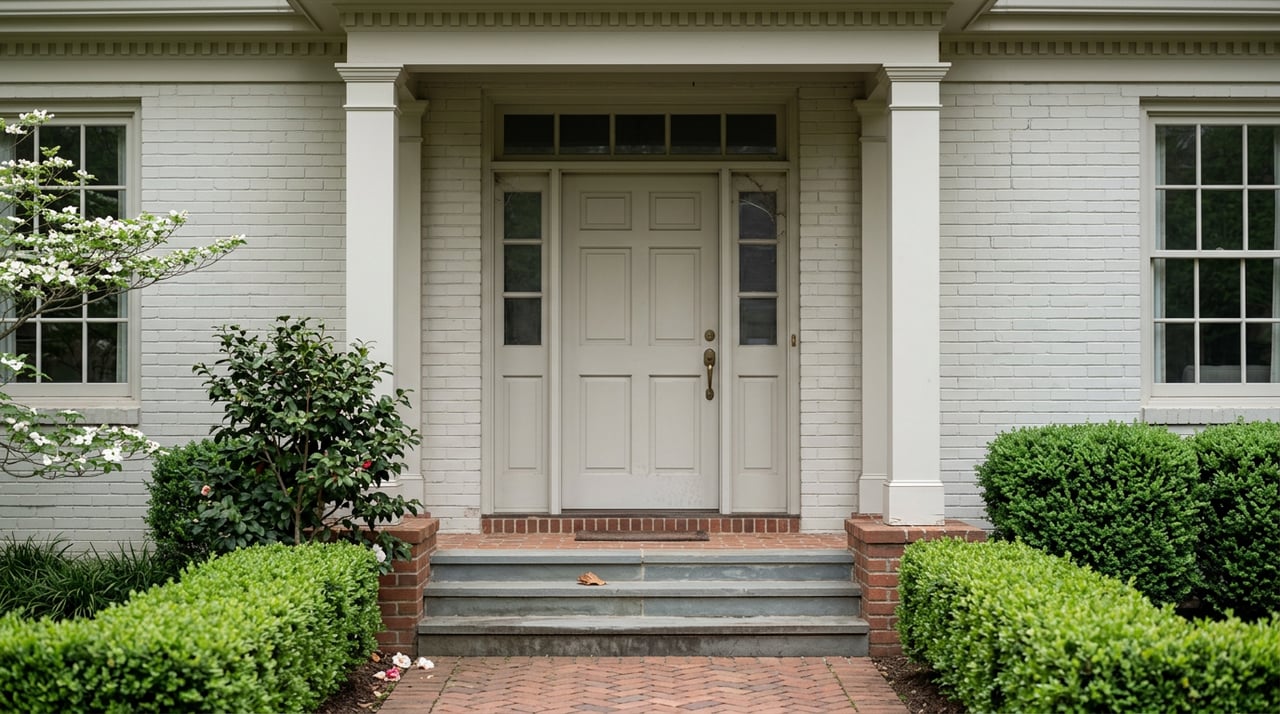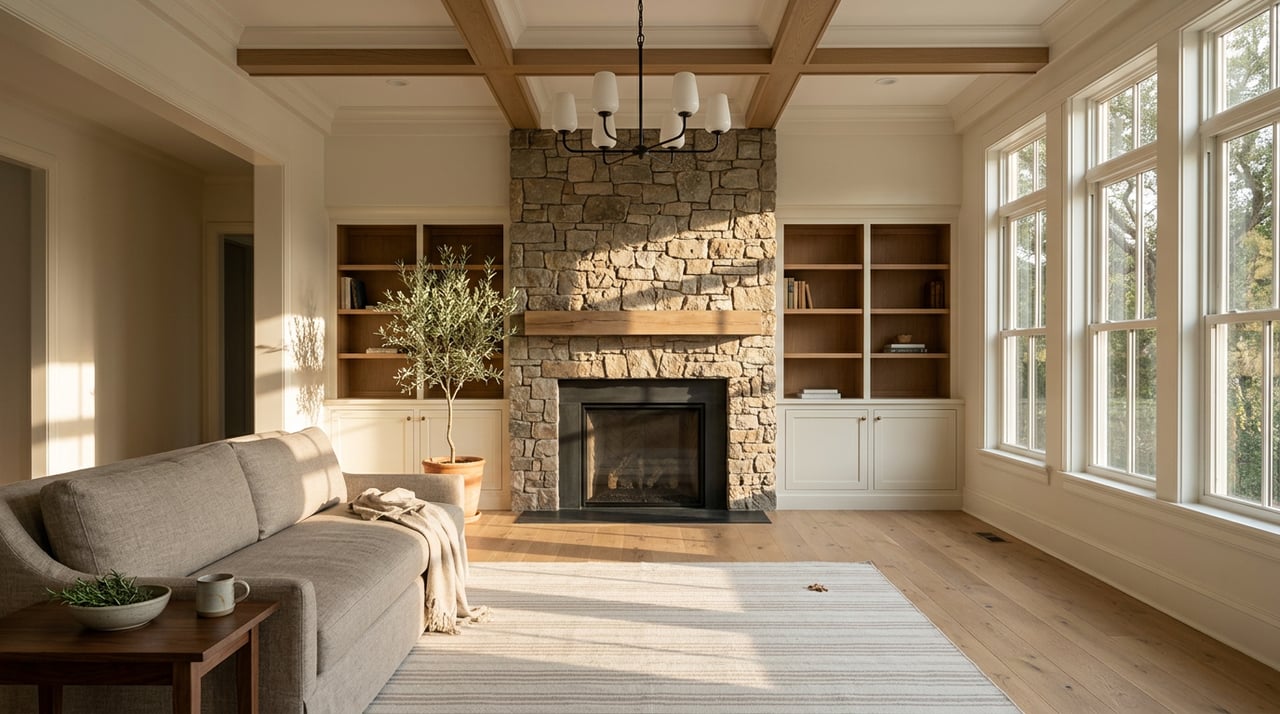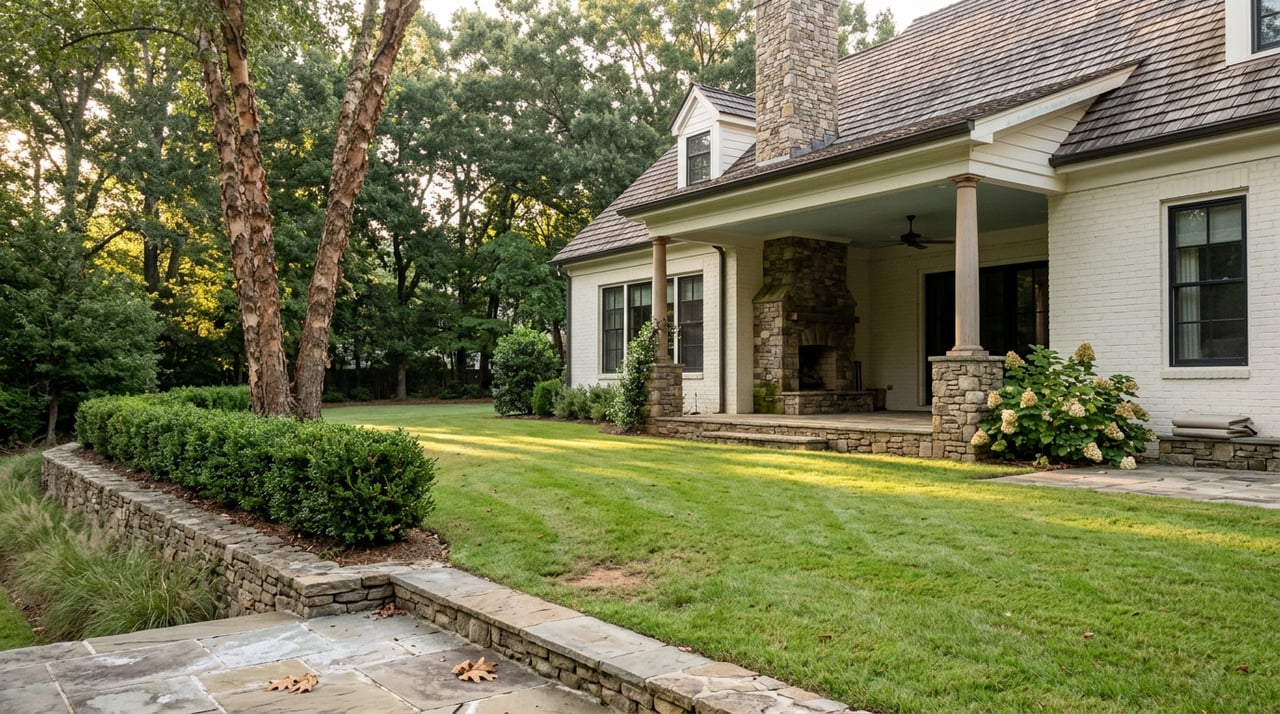
Two homes go up for sale on the same cove in Cumming this month. Same square footage, same lot size, same finish level, same walk to the water. One lists for meaningfully more than the other. A buyer scrolling listings sees two comparable houses and assumes the pricier one just has a better agent, or a seller who overreached. Neither is true. The difference sits at the water's edge, and it has nothing to do with the house at all.
That difference is a dock permit. Not a dock. A permit.
Nobody Actually Owns the Water
Lake Sidney Lanier is a reservoir the U.S. Army Corps of Engineers built by damming the Chattahoochee River in 1956, and the Corps still owns and manages the shoreline inside its project boundary. A Cumming property line rarely runs to the water. It runs to a federal boundary, and the strip between that boundary and the shoreline belongs to the government, not the homeowner.
What sits on that strip, if anything, is governed by the Corps' Shoreline Management Plan. A private dock isn't a fixture that comes with the house the way a deck or a fence does. It's a Shoreline Use Permit, a license the Corps issues to a specific person for a specific footprint on land it still controls. That distinction is the entire thesis of this piece: a Cumming buyer comparing two lake-adjacent listings isn't really comparing two houses. They're comparing two different relationships to a federal waiting list.
The Cap That Sets the Ceiling
The Shoreline Management Plan caps private dock permits on Lake Lanier at 10,615 lake-wide. That number isn't a soft target. In 2016 reporting from Forsyth County News, the Corps confirmed the lake had reached that limit and stopped issuing new permits altogether, reviewing the backlog only as existing permits lapsed or were revoked. At that point the waiting list ran about 170 names deep, and Ranger Russell Lundstrum put the odds bluntly: "about one out of every 10 to 15 requests are approved." The cap itself hasn't moved since. Current sources still cite the same 10,615 ceiling nearly a decade later.
That scarcity is why Mary Thompson of Lanier Appraisal Service, quoted in the same reporting, made a point worth sitting with:
"there is a market for lake access and views without the high ticket sale price of those that include dock permits"
Those are two different products wearing the same "lakefront" label. One is a house near water. The other is a house near water that also happens to hold, or come with an assignable claim to, one of a fixed number of federal slots. Comps that blend the two will always look confusing until a buyer knows which category each sale actually belonged to.
Not Every Shoreline Even Qualifies
Before permit availability matters, the shoreline itself has to be eligible. The Corps classifies Lake Lanier shoreline by zone, and only property mapped as Limited Development Area can support a private dock at all. Property mapped as Protected Shoreline Area cannot, no matter how the listing photos frame the water view or what the house three doors down has.
| Shoreline Classification | What It Means for a Dock |
|---|---|
| Limited Development Area (LDA) | Dock-eligible, subject to a permit being available under the lake-wide cap |
| Protected Shoreline Area (PSA) | Never dock-eligible, regardless of frontage or what neighboring lots have |
This is a due diligence item, not a negotiating point. A buyer under contract in East Forsyth County off a road like Pilgrim Mill, or anywhere near the shoreline, can confirm classification directly with the Corps' Lake Lanier Shoreline Management office before the due diligence period runs out. Confirming it after closing solves nothing.
Why the Permit Doesn't Just Come With the Deed
Here's the part that catches buyers off guard even when they know the cap exists: an existing dock permit does not automatically follow the property to a new owner. It expires the moment the deed changes hands. The new owner has to apply to have it reissued in their name, and the Corps won't start that paperwork on a settlement statement. It requires the recorded deed from the county, which means there's a real gap between closing day and having a valid permit on file.
A few other details shape that gap:
- If the dock has electrical service, the file needs a licensed electrician's certification confirming it meets code before the Corps will act on it.
- Once reissued, the new permit is typically good for five years, tied to the specific footprint already on file. A buyer can't assume they can quietly expand a dock that's smaller than they'd like.
- If a seller can't produce the permit number, expiration date, and any modification history, that's not a paperwork inconvenience. It's a reason to verify status directly with the Corps before pricing the amenity into an offer at all.
None of this shows up in square footage, and none of it shows up on a standard seller's disclosure the way a roof age or a foundation issue would. It shows up only if someone asks.
What This Actually Does to the Number on Zillow
Market snapshots compiled at the start of 2026 put the median price across all Lake Lanier-area properties at roughly $955,000, with homes carrying an active, documented private dock averaging closer to $1.15 million. That gap, on the order of $200,000, tracks with permit status more cleanly than it tracks with bedroom count or lot size. Two houses can be nearly identical in every measurable way and still land on opposite sides of that line, because one carries a transferable claim to a capped federal resource and the other doesn't.
It also explains why a broad search for "waterfront" homes in Cumming turns up a much wider and lower price range than a search narrowed to homes specifically marketed with a private dock in place. Waterfront sweeps in creek frontage, shallow coves, and shoreline classified as protected. Dock-eligible, dock-equipped property is a much smaller, more expensive slice of that same broad category, and the two get conflated constantly in casual browsing.
Where This Leaves a Cumming Buyer Right Now
Water level is worth checking too, separate from the permit question. The Corps has historically paused new Shoreline Use Permit applications during drought, triggered around the 1,063 to 1,064 foot mark. As of late July 2026, USGS gauge readings at Buford Dam put the lake around 1,066 feet, roughly four and a half feet below the summer full-pool target of 1,071 feet, and rising. That's a normal seasonal range, not drought territory, which means the binding constraint on new docks right now is the permit cap itself, not lake level. A buyer touring lake-adjacent listings in Cumming this month should be asking about permit status and shoreline classification, not worrying about a water-level moratorium that isn't currently in effect.
Before You Write an Offer
If a listing anywhere near Lake Lanier, in neighborhoods like Lanier Estates or elsewhere around Cumming, advertises a private dock, get these confirmed before due diligence expires:
- The Corps permit number, issue date, and expiration date
- Written confirmation from the Corps' Lake Lanier Shoreline Management office that the permit is current and assignable
- The shoreline classification for that specific parcel, not the general area
- Any open violations or deficiencies tied to the structure
- A dock condition inspection separate from the home inspection
A seller who can hand over that folder without hesitation is usually pricing an amenity honestly. A seller who can't is asking a buyer to price in uncertainty, and that uncertainty should show up in the offer, not get discovered after closing.
FAQ
Does a Lake Lanier dock permit transfer automatically when I buy the house? No. The permit expires when the deed changes hands, and the new owner has to apply to the Corps for reissuance using the recorded deed.
Can I add a new dock to a lake home that doesn't already have one? Only if the shoreline is classified Limited Development Area and a permit slot is available under the lake-wide cap of 10,615. Protected Shoreline Area parcels are never eligible.
Is Lake Lanier currently under a moratorium on new dock permits? Not based on water level. The lake sat well above historical drought-trigger levels as of late July 2026. The cap itself, not the water level, is the current limiting factor.
A lake home search in Cumming rewards the buyer who asks about the permit before falling in love with the view. If you're comparing waterfront options in Forsyth County and want someone who'll pull the permit history and shoreline classification before you write an offer, not after, Mark Shoda can walk you through it. Let's Connect.