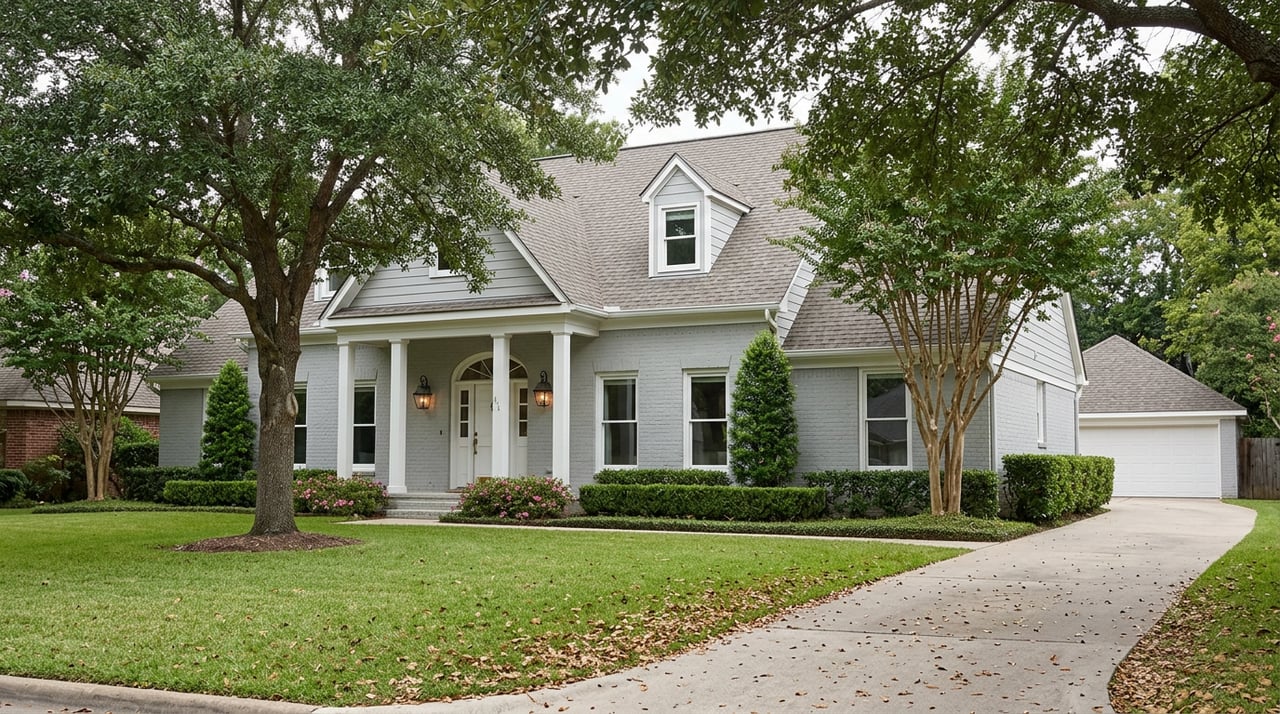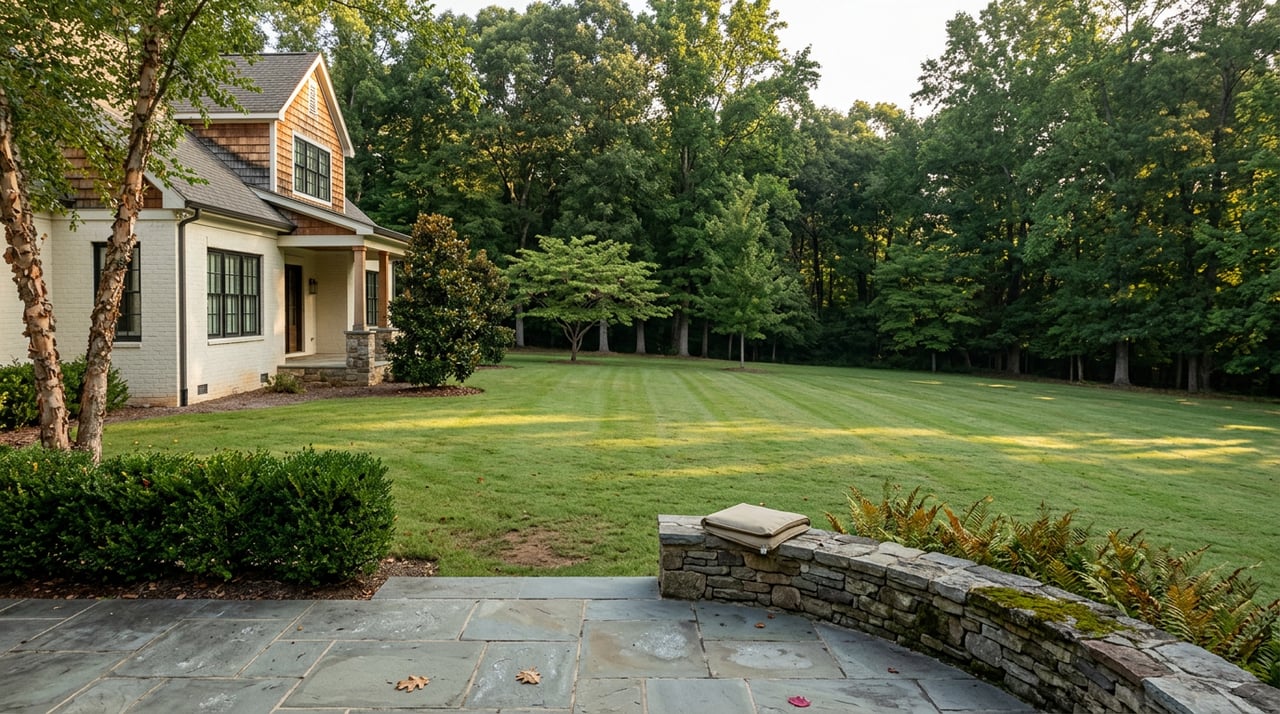
Ask a buyer in Canton what their home inspection covers and most will say everything: roof, foundation, electrical, HVAC, plumbing. Ask what happens underground, past the point where the pipe leaves the house, and the answer gets quiet. For a meaningful share of homes in and around Canton, that quiet spot is where the real risk lives.
A standard home inspection in Georgia does not evaluate a septic system. It cannot. A true septic evaluation requires pumping the tank, probing the drain field, and running a loaded water test, work that falls to a licensed septic contractor, not a general home inspector. So the report a buyer reads before closing, the one that feels thorough because it runs fifty pages and flags a cracked outlet cover, says nothing about the system that costs the most to fix.
Where Canton Actually Splits
Canton's housing stock is not one market. It is at least two, and they sit closer together on a map than they do on a utility line.
BridgeMill, one of the larger master-planned communities in Canton, was built on connected water and sewer service through the Cherokee County Water and Sewerage Authority. Buyers touring high-density, amenity-driven communities like BridgeMill, River Green, Harmony on the Lakes, or Great Sky are generally shopping a different infrastructure reality than buyers looking at an older subdivision, a large-lot property, or land off a county road, where a septic system is standard. But the name of a neighborhood is not proof of what's underground at a specific address. Cherokee County's own guidance draws the jurisdiction line clearly: if a property sits in unincorporated Cherokee County, questions about sewer service go to the Cherokee County Water and Sewerage Authority. If it sits inside a city's limits, the city handles it directly. Two properties a short drive apart can answer to entirely different utility structures, and a buyer relying on general assumptions about "Canton" as a single market will guess wrong about which one applies.
This is not a small distinction. A 2.56-acre parcel currently on the market in Canton lists an approved soil test confirming the site is suitable for a septic system, a detail that would be irrelevant on a lot inside River Green but is the difference between a buildable property and a stalled one anywhere outside connected sewer service.
| Community type | Typical utility setup | What it means for a buyer |
|---|---|---|
| BridgeMill (confirmed via CCWSA) and comparable high-density master-planned communities | Connected municipal or authority sewer | Standard inspection covers what you need, but confirm the specific address |
| Older subdivisions, large-lot and rural parcels | Private septic system | Standard inspection does not cover the system most likely to fail |
| Raw or buildable land outside city limits | Septic pending soil evaluation | A soil suitability letter is not optional paperwork, it determines whether the lot can be built on at all |
BridgeMill's median listing price sat around $670,000 as of mid-2026, reflecting its amenity package and connected infrastructure. That price tells a buyer what the golf course and pool access cost. It says nothing about what a comparable septic-dependent property a few miles away will cost to properly evaluate before closing, because that cost isn't baked into the list price at all. It shows up later, as an inspection line item nobody budgeted for or, worse, as a repair bill after the deal has closed.
The Ground Itself Works Against You
Cherokee County sits in the upper Piedmont, a region of rolling terrain, red clay soil, and scattered rocky outcrops. That geology is a known complication for septic design. Clay compacts and drains poorly. Shallow bedrock limits how deep a drain field can go. When a percolation test comes back unfavorable, the fix isn't a standard gravity system, it's an engineered alternative such as a mound system, sand filter, or aerobic treatment unit, each of which costs more to install and more to maintain.
Georgia's septic rules are set statewide by the Department of Public Health under Chapter 511-3-1, last substantively revised effective January 1, 2016. Any tank installed after February 20, 2000 is required to have two compartments with an effluent filter, and every new installation requires two separate inspections, a pre-construction site verification and a final inspection before backfill, both conducted by the county health department. That regulatory backbone is the same across Georgia. What changes county to county is how fast it moves. Cherokee County is one of the higher-volume counties in the state for septic permitting, alongside Forsyth, Gwinnett, and Hall, all fast-growing metro Atlanta counties where demand for permits regularly outpaces the county's processing capacity. A buyer who discovers a failed drain field during due diligence isn't just facing a repair bill. They may be facing a permit queue.
What a Failed System Actually Costs
The economics here are lopsided enough to change how a buyer should think about the process. A standalone pre-purchase septic inspection in the Canton area typically runs $300 to $650, or $400 to $800 bundled with pumping. A failed system, one that needs a new drain field or a full replacement, can run $15,000 to $30,000 or more depending on soil conditions and system type.
Septic professionals in the area apply a rough rule of thumb when a system needs work: if the repair cost exceeds half the cost of full replacement, replacement is usually the better long-term move over a 20 to 30 year horizon. That math only helps a buyer who has the inspection results in hand before they own the problem. Without it, the first sign of trouble is often a slow drain, standing water in the yard, or a sewage odor, discovered after the closing has already happened and the seller has already moved on.
The Financing Detail That Flips the Risk
Here is the part that catches most buyers off guard. The requirement to actually get a septic inspection does not track with how careful a buyer thinks they're being. It tracks with how they're financing the purchase.
VA loans require a septic inspection and a certification that the system is in good working order. That requirement is built into the loan process, which means a VA buyer gets a mandatory check whether they think to ask for one or not. Conventional loans are looser. The lender doesn't always require a septic inspection. Sometimes a title company or real estate attorney will insist on one as part of closing, but it isn't guaranteed. And cash purchases carry the least structural protection of all. There's no lender in the transaction to require anything, no institutional check acting on the buyer's behalf. A cash buyer who skips the inspection to move faster is taking on the most exposure of any buyer type, at the exact moment they might assume their all-cash offer makes them the most protected party in the deal.
That's the piece worth sitting with. The buyer who feels most in control of the transaction, the one paying cash, closing fast, waiving contingencies to win a competitive offer, is often the one with the least built-in reason to ever learn what's actually happening underground.
Before You Write an Offer
A few steps close most of this gap, regardless of financing type.
- Ask early whether the property is on septic or connected sewer, and confirm which utility or city department has jurisdiction if it's septic.
- Schedule a licensed septic inspection during your due diligence period, not after, so there's time to negotiate findings before the contingency deadline.
- Request the seller's pumping and inspection history. A seller who can produce recent records moves through this step faster and it's a reasonable ask regardless of how the deal is structured.
- If the property is raw land, confirm a current soil suitability determination exists. An old or missing evaluation can stall a build before it starts.
- If your loan type doesn't require an inspection, treat that as a reason to schedule one yourself, not a reason to skip it.
FAQ
Does every home in Canton have septic? No. BridgeMill, for example, is served by connected water and sewer through the Cherokee County Water and Sewerage Authority. Septic is more common in older subdivisions, on large lots, and in unincorporated parts of the county, so the specific address matters more than the neighborhood name.
Is a septic inspection required by law in Georgia? Not universally at the point of sale. It's required for VA-financed purchases. For conventional loans and cash deals, it's typically a matter of what the title company, attorney, or buyer requests, not a blanket legal mandate.
How long does a septic inspection take, and can it fit inside a typical due diligence period? Most pre-purchase inspections in the Canton area take one and a half to two and a half hours on site, with scheduling usually possible within 48 to 72 hours. That timeline fits comfortably inside most standard due diligence windows if it's booked promptly after going under contract.
What if the property is new construction? New installations still go through two mandatory county inspections before backfill, a pre-construction site verification and a final inspection. That process happens during construction, not at resale, so a new home's septic system should already carry documentation of both.
Cherokee County's growth has made septic status one more variable buyers have to price in alongside school zones, commute times, and lot size. Getting it right takes someone who knows which Canton neighborhoods sit on which side of that line and how to build it into an offer before it becomes a post-closing surprise. If you're weighing a purchase or a sale anywhere in Canton's mix of established and newly built communities, Mark Shoda can walk through what a specific property's utility setup means for your timeline and your numbers. Let's Connect.